
How to Plan Cleaning for a New or Remodeled Convenience Store
October 26, 2026
Convenience stores are changing, with retailers investing in store remodels and updated designs that place a greater emphasis on food offerings and the overall customer. And they’re not alone; many operators are remodeling existing locations, expanding food service and beverage programs, and reconsidering how each part of the store supports the customer experience.
Whether renovating an existing store or building a new one, operators need a cleaning strategy that accounts for how each area will be maintained within daily store operations. The surfaces, equipment, storage, and workflows selected during a construction or remodeling project will determine how practical the store is to maintain after it opens.
Bringing the cleaning program into the planning process can help prevent avoidable labor, product, and maintenance costs later.
Plan for Long-Term Cleaning During C-Store Design
Construction decisions should account for long-term maintenance. Choosing surfaces suited to the store’s cleaning demands can reduce labor and product costs while extending their service life.
Before approving materials, operators should consider the following questions to understand their total operating cost and ensure the finished store is practical to maintain:
- What types of soil will accumulate here?
- How frequently will the area need to be cleaned?
- Which products and tools are compatible with the material?
- Can employees reach the entire surface safely and efficiently?
- Will routine cleaning fit into normal shift responsibilities?
- Does the material require periodic sealing, refinishing, or restorative maintenance?
- Can the same process be repeated consistently across additional locations?
Use our convenience store cleaning checklist to identify the shift-based, daily, weekly, and periodic tasks the finished store will need to support.
Build a Whole-Store Convenience Store Cleaning Program
A whole-store cleaning program gives employees clear products and procedures for each part of the property. The convenience store cleaning system should account for the forecourt, floors, food service areas, restrooms, and other high-use spaces, along with the storage, training, and replenishment needed to maintain them.
Plan Forecourt and Gas Island Cleaning
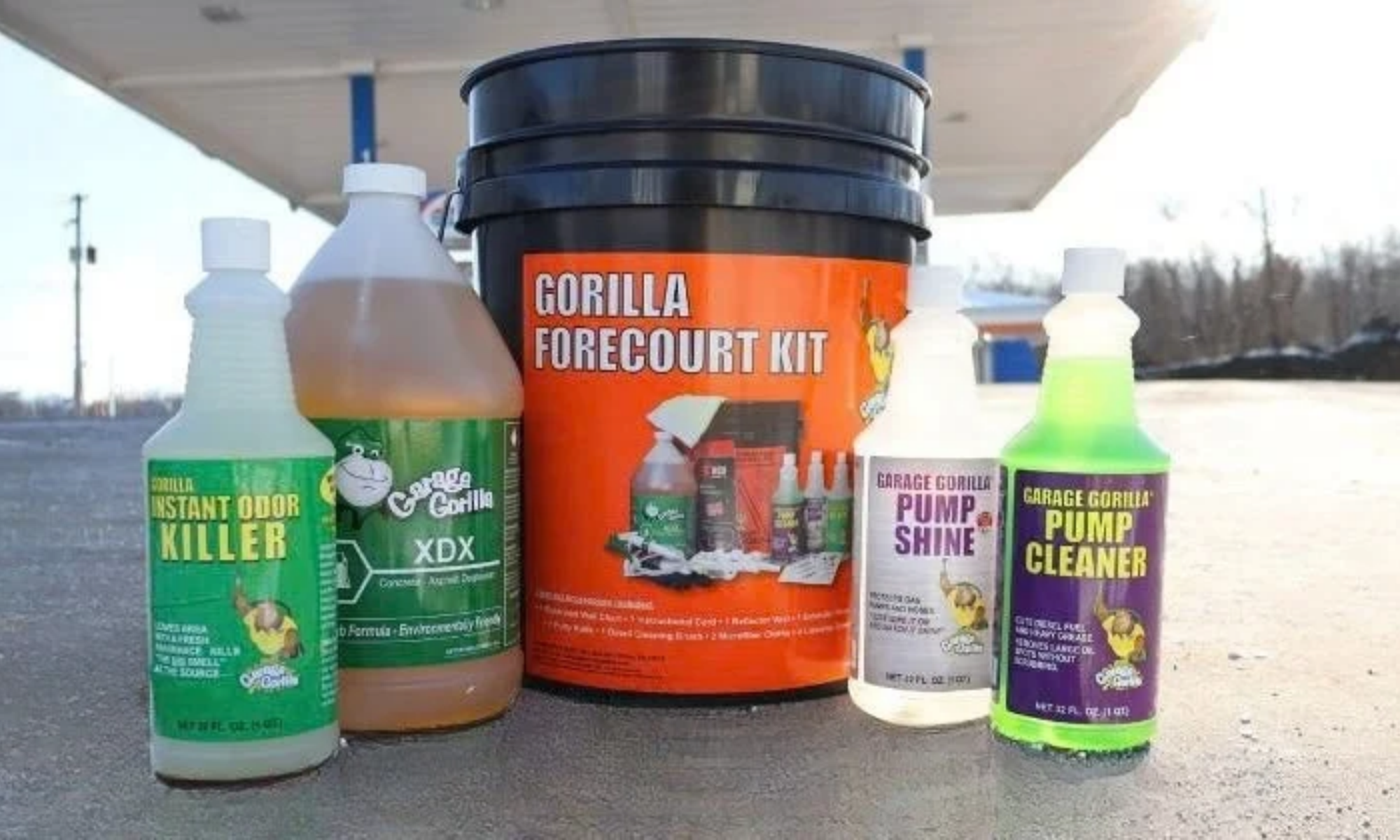
The forecourt plan should cover routine care for pumps, hoses, nozzles, concrete, asphalt, and the surrounding gas island. The Garage Gorilla Forecourt First Kit brings together ready-to-use products, tools, safety equipment, and instructional materials, giving employees an established process from opening day.
Match Floor Care Products to the Installed Materials
Flooring choices should be paired with the products and maintenance schedule required to preserve them. A complete commercial floor care system may include routine cleaners, sealers, finishes, restorative products, and solutions for demanding exterior surfaces. Making these selections during planning helps operators define daily care and periodic maintenance before the floors enter service.
Plan Food Service and Beverage Area Cleaning
Prepared foods, coffee, fountain beverages, and expanded menus require procedures for food-contact surfaces, dishwashing, equipment, drains, and grease control. Selecting food-safe cleaning products alongside the equipment and layout allows operators to plan storage, assign tasks, and train employees before food service begins.
Plan Convenience Store Restroom Cleaning and Odor Control
Restroom maintenance requires coordinated procedures for surface cleaning, sanitizing, stain removal, drain care, and odor control. Choosing commercial restroom cleaners during the design or renovation process also allows operators to account for storage, ventilation, fixture compatibility, and cleaning access.
Standardize Cleaning Procedures Across the Store
Bringing these area-specific plans together gives employees one coordinated system to follow. Operators can establish where products are stored, which tasks belong to each shift, how supplies are replenished, and how the same standards will be carried into future locations.
Turn the Cleaning Program Into Daily Store Procedures
Building or remodeling a convenience store requires a substantial investment. The cleaning program helps protect that investment after the contractors leave and customers arrive.
Planning early allows operators to match products and procedures to each area, prepare storage and workflows, train employees consistently, and account for maintenance as part of the store’s long-term operating cost. It also reduces the likelihood that managers will have to assemble a cleaning system reactively, one problem at a time.
Apter Industries offers convenience store cleaning products, including solutions for forecourts, restrooms, floors, glass, food service areas, beverage equipment, and other indoor surfaces. Our cleaning kits can also help new locations and first-time buyers establish a more coordinated starting point.
If you are planning a new store or remodel, contact Apter Industries to discuss the cleaning demands of the finished space before opening day.
Convenience Store Construction and Remodel Cleaning FAQs
When Should Cleaning Be Considered During Construction or Remodeling?
Cleaning requirements should be reviewed while materials, equipment, layouts, and storage areas are being selected. Early planning gives operations teams time to assess surface compatibility, employee access, product storage, and recurring maintenance requirements before construction decisions are finalized.
How Does Post-Construction Cleaning Fit Into the Program?
Post-construction cleaning prepares the location for opening by removing dust, debris, adhesives, and residue left by the project. The ongoing cleaning program establishes the products, procedures, frequencies, and employee responsibilities required once the store begins serving customers. Products, tools, storage areas, and training should be ready before the first operating shift.
Can One Cleaning Program Be Used Across Multiple Locations?
Multi-location operators can standardize approved products, core procedures, training materials, and purchasing practices. Each location should also be reviewed for differences in surfaces, equipment, layout, traffic, weather, and foodservice offerings. This creates consistent standards while accounting for the maintenance needs of the individual store.